In 2013-2014, Finance Minister P Chidambaram said growth would be between 6.1% and 6.7%. In 2014-2015, India, he said, wants growth to be above 7%.
The fiscal deficit was 4.9 per cent of GDP in 2012-13.

He said while bringing in investments, it is also necessary to manage the high current account deficit.

Instead of hiking duties, he plans to introduce inflation-indexed instruments to help curb a record current account deficit.
While SGBs are a sound investment, they aren't worth buying at any price. The interest income you earn from them will not justify paying a high premium.

Prices may go up because of higher energy costs, caused by the rise in shipping charges, with commercial vessels taking a longer route to avoid the troubled Red Sea region, the finance ministry said on Monday. Iran-backed Houthi rebels of Yemen are repeatedly attacking ships in the Red Sea. While the global economy is grappling with challenges such as sticky inflation, sluggish growth, and mounting fiscal pressure, India's external sector could face "potential risks" due to the ongoing geopolitical tensions, according to the finance ministry's report on the review of the Indian economy.

If CAD remains high for 3-4 quarters, central bank may intervene.

'India has the potential to grow at more than 7%, with the monetary policy providing a supportive hand.'

India's exports jumped 45.76 per cent to $33.28 billion in August on account of healthy growth in segments like engineering, petroleum products, gems and jewellery and chemicals, even as the trade deficit widened to a four-month high of $13.81 billion.

Exports of petroleum products, chemicals, pharmaceuticals, gems and jewellery, and engineering goods registered a positive growth.
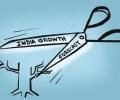
The GDP growth is expected to be about 6.3 per cent in the current fiscal year, a tad lower than the government's estimate of 6.4 per cent, owing to several factors such as weak demand, SBI research report said on Wednesday. According to the first advance estimates (FAE) of National Income for 2024-25 released by the National Statistics Office (NSO), released on Tuesday, India's economic growth rate is estimated to slip to a four-year low of 6.4 per cent in 2024-25, because of poor showing by the manufacturing and subdued investments.

The deficit increased to $ 57.2 billion or 2.1 per cent of gross domestic product (GDP) in 2018-19 as against 1.8 per cent in the previous year.

'Investors' decisions should reflect their financial goals, risk tolerance, and the amount of gold already present in their portfolio.'
Hikes benchmark lending rate by 35 basis points to 6.25 per cent Cuts growth projection for this fiscal to 6.8 per cent from 7 per cent estimated in September Inflation to come down below 6 per cent in March quarter, to average 6.7 per cent this fiscal

The US retaliatory tariffs are a major setback for the Indian gems and jewellery exports, apex industry body GJEPC said on Thursday as it urged the government to take steps to secure the long-term interest of the sector. The US has announced 27 per cent reciprocal tariffs on India saying New Delhi imposes high import duties on American goods, as the Donald Trump administration aims to reduce US' trade deficit and boost manufacturing.

Of $90 billion remittances that India is expected to receive in 2022, only $27.4 billion has come in the first half of the year.

'We need to be very vigilant as we are passing through some fraught times.'
.jpg)
Economic Affairs Secretary Arvind Mayaram said India had brought its fiscal deficit down more sharply and quickly than any other country, but managing the current account deficit was more complicated because the government had less control of it.

The country's exports rose by about 6 per cent to a "record" $447 billion during 2022-23 on account of healthy growth in the outbound shipments of sectors such as petroleum, pharma and chemicals and marine, Commerce and Industry Minister Piyush Goyal said on Thursday. The country's imports also grew by 16.5 per cent to $714 billion in 2022-23 as against $613 billion in 2021-22. He said that the exports of goods and services together scaled "new heights" and has increased by 14 per cent to $770 billion in 2022-23 as against 676 billion in 2021-22.

The country's current account deficit is likely to decline to 1.1-1.2 per cent of the gross domestic product in the third quarter, say rating agencies.

Rajan also said the RBI had reduced the current account deficit "substantially".

Every time the Indian economy has faced headwinds due to international developments, the oil sector has played a crucial role, explains A K Bhattacharya.

The government has hiked gold import duty to 15 per cent from 10.75 per cent to check the current account deficit (CAD) and rising import of the yellow metal. The duty changes came into effect on June 30. Earlier, the basic customs duty on gold was 7.5 per cent, now it will be 12.5 per cent.

The government may save over Rs 70,000 crore (Rs 700 billion) on capital and revenue expenditure allocated towards new schemes in the FY25 Budget that are yet to be implemented.

'If you align your ambition with India's rise, the peak of your careers will unfold alongside the peak of India's power.'

Decisions taken at home to counter impact of 2008 economic meltdown were among the reasons for depreciation of the Indian currency.

Amid the ongoing global tariff war, Reserve Bank Governor Sanjay Malhotra on Wednesday said he is more worried about its impact on growth than inflation. Speaking to the media after presentation of the first bi-monthly monetary policy for the current financial year, Malhotra said, RBI has reduced the growth forecast for 2025-26 by 20 basis points to 6.5 per cent.

Mayaram also said as of now, a shutdown of the US government is not likely to have a major impact on the Indian economy.
.jpg)
The rupee had slumped to a record low of 59.9850 rupee to the dollar on Thursday, as the country's record high current account deficit is exacerbating its vulnerability in an emerging market rout.

The Reserve Bank on Wednesday hiked key benchmark policy rate by 25 basis points to 6.5 per cent, citing sticky core inflation.

The union government is expected to cut two per cent import duty in gold in the forthcoming budget, as local jewellers run out of inventory, a leading US brokerage said.

Outlook for external sector is the most favourable.

India's growth rate is expected to improve to 7 per cent by FY 2017, while inflation and current account deficit are likely to moderate in the coming years, a Citigroup report said.
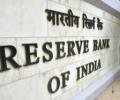
It added that industrial output is on decline due to poor demand and lack of infrastructure.

The feud reached its peak when Musk made explosive allegations about Trump's connection to disgraced financier Jeffrey Epstein, marking a dramatic escalation in their increasingly personal conflict.

The senior Congress leader was in New Delhi to campaign in Maharashtra Assembly polls.

The finance ministry expects a broad-based moderation in inflationary pressures on the back of an anticipated reduction in food prices as a result of the uptick in summer sowing. The retail inflation rate remained stubbornly clung to the 5 per cent mark in seven of the past eight months. "Core inflation is trending downwards, indicating a broad-based moderation in price pressures... Driven by strong domestic growth and benign global commodity prices, core inflation is declining continuously.
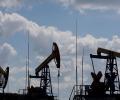
India's purchase of US crude oil has picked up in 2025 and could easily double their previous levels, government officials said on Wednesday. The surge comes in the wake of the then-incoming Donald Trump administration's announcement that it would consider hiking tariffs on a reciprocal basis, and pushed some countries, especially those with large trade surpluses with the US, to buy more of its energy.

Two senior ministry officials, who declined to be named, said the aim was to attract more capital flows from wealth funds in West Asian countries.

India's economy is likely to grow by 6.5 per cent in the current and the next financial year, an EY report said, attributing lower than anticipated expansion in the September quarter to fall in private consumption expenditure and gross fixed capital formation. Real GDP growth eased to a seven-quarter low of 5.4 per cent in July-September -- the second quarter of the current 2024-25 fiscal year.
 © 2026 Rediff.com - Advertise with us - Disclaimer - Privacy Policy - Sitemap - Feedback - About us - Terms of use - Grievances